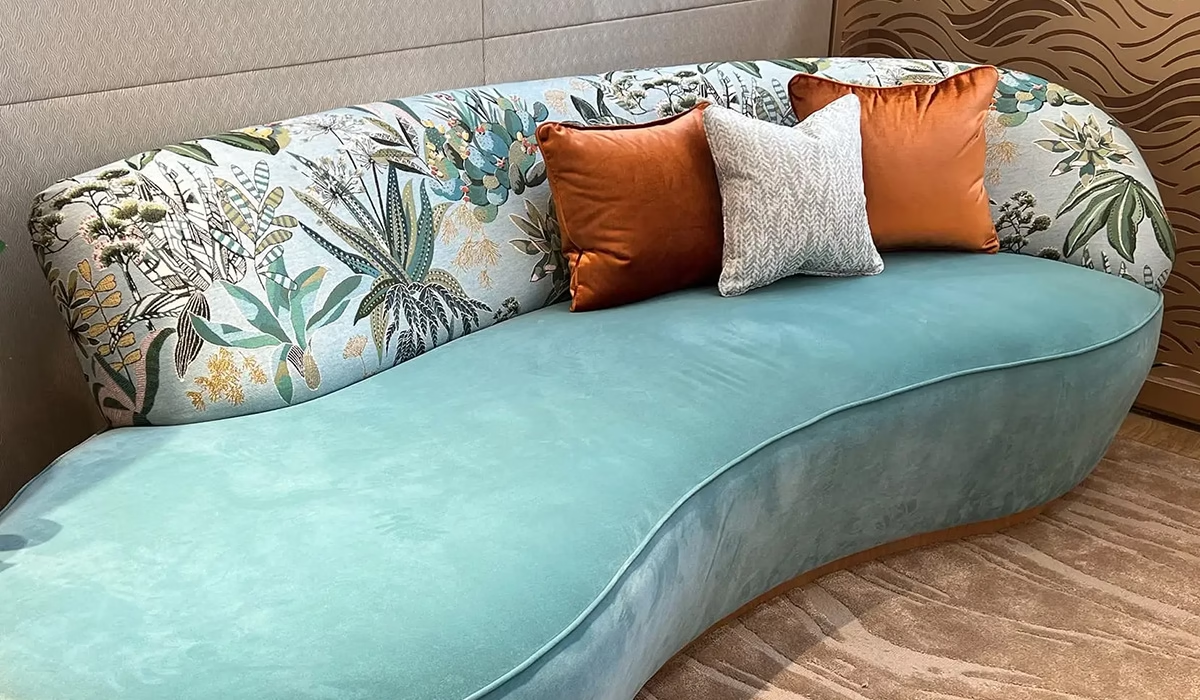
What is Art Deco Interior Design?
Art Deco interior design is a style that combines bold geometry, symmetry, luxurious materials and dramatic lighting to create rooms that feel glamorous yet ordered. It emerged in the 1920s and 1930s, and today it is most often used in a modern, restrained form that keeps the elegance without the excess.
The style takes its name from the 1925 Exposition Internationale des Arts Décoratifs et Industriels Modernes in Paris, although the term Art Deco only became common decades later. This article explains where Art Deco interior design came from, its defining features, how it appeared in Australia, how it differs from related styles, and how it is interpreted in contemporary homes. It forms part of our guide to Art Deco furniture.
Where Did Art Deco Interior Design Come From?
Art Deco interior design came from the optimism of the years after the First World War, when interior designers wanted a style that felt new, confident and connected to modern life. It drew on machine age forms, fast travel, skyscrapers and a fascination with ancient and distant cultures.
Paris was its early centre, but the style spread quickly to New York, London and beyond, appearing in ocean liners, cinema theatres, hotels, department stores and private homes. By the 1930s, a sleeker version known as Streamline Moderne had emerged, with rounded corners and horizontal lines inspired by speed and aerodynamics.
What Are the Defining Features of Art Deco Interior Design?
The defining features of Art Deco interior design are strong geometry, symmetry, luxurious materials, high contrast and deliberate lighting. Together they create interiors that feel both disciplined and glamorous.
Which Shapes and Motifs Are Typical of Art Deco?
Typical Art Deco shapes include stepped or ziggurat profiles, fleur de lis ,sunbursts, fans, chevrons, zigzags and strong vertical lines. Curves also play a major role, from rounded furniture ends to sweeping arches and circular mirrors.
These motifs appear across an interior: in furniture, rugs, lighting, joinery, flooring and even door hardware. In the best interiors, one or two motifs are repeated with discipline rather than scattered at random.
Which Colours Suit Art Deco Interior Design?
Art Deco interior design colour schemes are built on contrast. Black and white, cream and ebony, and deep jewel tones such as emerald, sapphire and ruby are paired with metallic accents in gold, brass, silver or chrome.
Earlier Art Deco interiors could be very colourful, but many of the most enduring schemes are surprisingly restrained, relying on two or three colours and a strong metal accent. This restraint is what makes the art deco style so adaptable to modern homes.
Which Materials Define an Art Deco Interior?
Art Deco furniture are defined by materials that reflect light and show craftsmanship. Figured timber veneers, lacquer, polished metals, glass, mirror, marble and velvet are the most characteristic.
The contrast between materials matters as much as the materials themselves. A glossy lacquered cabinet beside a velvet chair, or brass inlay set into dark timber, creates the layered richness that Art Deco furniture is known for.
Why Is Lighting So Important in Art Deco Interiors?
Lighting is important because Art Deco interiors are designed to glow. Statement pendants, wall sconces, uplights and reflective surfaces work together to create atmosphere, especially in the evening.
Mirrors and polished finishes multiply the effect, adding depth and a sense of space. In Art Deco interior design, a light fitting is often treated as a sculptural object in its own right rather than a purely functional fixture.
How Did Art Deco Appear in Australian Homes and Buildings?
Art Deco arrived in Australia in the interwar years and left its mark on cinema theaters, hotels, commercial buildings and apartment blocks, particularly in Melbourne and Sydney. Many of these buildings still shape the character of inner city neighbourhoods today.
Australian Art Deco tended to be functional and understated compared with its European and American counterparts, using clean geometry, face brick and simple detailing. That understated streak makes it a natural fit for contemporary Australian interiors, where Art Deco influences are now often combined with open plan living and abundant natural light.
How Is Art Deco Different from Art Nouveau and Other Related Styles?
Art Deco is different from Art Nouveau because it favours geometry and order, while Art Nouveau favours flowing, organic lines inspired by nature. Art Nouveau came first, around the turn of the twentieth century, and Art Deco can be seen partly as a reaction to it.
Other related styles share some of Art Deco’s DNA:
| Style | Key difference from Art Deco |
| Art Nouveau | Organic, plant inspired curves rather than geometry |
| Streamline Moderne | A later, sleeker form with rounded corners and horizontal lines |
| Hollywood Glam | A more theatrical take, with heavy use of mirror, velvet and metallics |
| Mid Century Modern | Simpler, more functional forms with less ornament and more natural timber |
| Modernist Art Deco | Art Deco geometry and contrast, pared back with modern restraint |
For more on the most theatrical of these relatives, read what is Hollywood Glam interior design.
How Can You Recognise Art Deco Features in an Existing Home?
You can recognise Art Deco features by looking for curved corners, stepped details, geometric glass and polished surfaces built into the architecture itself. Many interwar homes and apartments in Melbourne and Sydney still have some of these elements.
Common features include rounded walls or window bays, stepped cornices and parapets, geometric leadlight or etched glass, terrazzo or patterned tiled floors, chrome or brass door hardware and decorative ceiling roses with geometric patterns. Even one or two of these can give a home a strong starting point for Art Deco furniture
When a home has original features like these, the interior can respond to them rather than copy them. A curved sofa might echo a rounded bay window, or a rug might pick up the geometry of a leadlight panel, while the rest of the furniture stays clean and contemporary. This keeps the architecture as the star and prevents the interior from feeling like a reproduction.
How Is Art Deco Interior Design Interpreted Today?
Today, Art Deco interior design is usually interpreted with more restraint than the original. Interior designers keep the geometry, contrast and craftsmanship but reduce ornament, simplify the palette and allow more space around each piece of Art Deco furniture
A contemporary Art Deco interior might feature one curved sofa, a geometric rug, a statement light and a single polished cabinet, set against clean walls and open living areas. The result feels unmistakably Art Deco while suiting the way people live now. Our article on modern Art Deco design looks at this approach in detail, and minimalist Deco shows how far it can be refined.
A Melbourne home designed by luxury interior designer, furniture designer and manufacturer, Mark Alexander shows this interpretation well. It blends Minimalism and Art Deco in a black and white palette, with functional furniture in geometric shapes, statement lighting, patterned rugs, mirrors and layered metals. Bespoke couches, a fireplace and lighting were built specifically for the project. You can see it on the Art Deco interior page.
What Mistakes Should You Avoid with Art Deco Interior Design?
The most common mistake is doing too much. Art Deco relies on contrast and focus, so a room filled with competing patterns, metals and statement pieces quickly loses its elegance.
Other mistakes to avoid include:
• Mixing too many metals instead of choosing one main finish
• Using reproduction pieces that copy the look but lack proportion and quality
• Ignoring scale, so furniture overwhelms the room or looks lost in it
• Forgetting comfort, choosing pieces for appearance alone
• Neglecting lighting, which is essential to the style’s atmosphere
How Can Luxury Interior Designer, Furniture Designer and Manufacturer, Mark Alexander Help You Create an Art Deco Interior?
Luxury Interior designer Mark Alexander can help by designing an Art Deco interior around your home and your taste, then making the furniture for it in his own studio in Australia. The studio works across Art Deco, Modernist Art Deco and Hollywood Glam styles, and every piece of furniture is custom made.
If you love the style but are unsure how to use it without the room feeling dated or overdone, Interior designer Mark Alexander can help by choosing where Art Deco should lead and where the Art Deco interior should stay quiet. Book a private appointment through the Interior Designer Melbourne or Interior Designer Sydney page, or explore our guide to Art Deco furniture.
Frequently Asked Questions About Art Deco Interior Design
When was Art Deco popular?
Art Deco was most popular from the 1920s through the 1930s. It declined during the Second World War and returned to fashion in later decades, and it remains a strong influence on luxury interiors today.
Why is it called Art Deco?
The name comes from the 1925 Exposition Internationale des Arts Décoratifs et Industriels Modernes held in Paris. The shortened term Art Deco became widely used in the 1960s.
What is the difference between Art Deco and Art Nouveau?
Art Nouveau uses flowing, organic lines inspired by plants and natural forms, while Art Deco uses geometric shapes, symmetry and a machine age sense of order. Art Nouveau came first.
Is Art Deco still in style?
Yes. Art Deco remains popular, especially in a modern, pared back form that combines its geometry and rich materials with clean, contemporary interiors.
What is Streamline Moderne?
Streamline Moderne is a later form of Art Deco from the 1930s, with rounded corners, long horizontal lines and polished surfaces inspired by aerodynamic design and modern transport.