Spanish Deco Dining Table Design: How a Custom Art Deco Dining Table Is Made
A custom Art Deco dining table is designed around the room, the number of people it must seat and the style of the home, then made by hand to that design. Spanish Deco is one of the custom made dining table designs from Mark Alexander Design Artistry, sketched, planned and hand crafted in Australia using traditional techniques and Australian made.
A dining table is often the largest and most used piece of furniture in a home, and in an Art Deco interior it is also the centrepiece. This article explains what makes an Art Deco dining table, the decisions involved in designing one, how size and shape should be chosen, how the dining table is made and finished, and what to approve before production. It forms part of our guide to Art Deco furniture.
What Makes an Art Deco Dining Table Different from Other Dining Tables?
An Art Deco dining table is different because its form, base and surface are designed as one strong statement. Where many dining tables are simple tops on four legs, an Art Deco dining table often has a sculptural pedestal or stepped base, a richly figured surface and a confident outline.
Common features include:
• Pedestal or stepped bases that give the dining table a sculptural presence
• Figured timber veneers laid to create symmetry across the top
• Inlay or contrasting edges in timber or metal
• Deep, polished finishes that reflect light
• Strong outlines, round, oval or rectangular, with softened or stepped corners
In a modern interpretation, these features are used selectively. A dining table might have a striking base and a simple top, or a beautifully figured top above a restrained base.
Which Decisions Shape a Custom Art Deco Dining Table Design?
Four decisions shape a custom Art Deco dining table: its shape, its size, its base and its surface. Each one affects how the dining table looks, how many people it seats and how it sits in the room.
Which Dining Table Shape Suits Your Dining Room?
The right shape depends on the room’s proportions and how you entertain. A round dining table suits square rooms and encourages conversation, an oval table suits longer rooms while keeping soft edges, and a rectangular dining table suits long rooms and larger gatherings.
| Shape | Best for | Art Deco character |
| Round | Square rooms, conversation, smaller groups | Echoes Art Deco curves and sunburst motifs |
| Oval | Longer rooms, flexible seating | Soft outline with a sense of movement |
| Rectangular | Long rooms, larger gatherings | Strong, formal geometry |
| Racetrack | Long rooms needing softer corners | Streamlined, modern Deco feel |
How Should a Dining Table Be Sized?
A dining table should be sized so each diner has roughly 60 centimetres of table width and there is about 90 centimetres of clear space behind every dining chair. Those two guidelines decide most sizing questions.
As a general guide, a round dining table of about 120 centimetres seats four comfortably, and around 150 centimetres seats six. For rectangular tables, add roughly 60 centimetres of length for each additional pair of diners. Pedestal bases are useful here, because they free up leg room and allow more flexible seating than four corner legs.
Which Base Designs Work for an Art Deco Dining Table?
Pedestal, stepped and sculptural bases work best for an Art Deco dining table. A single pedestal suits round dining tables, while double pedestals or a sculptural central base suit longer dining tables.
The base should be substantial enough to feel stable and look balanced beneath the top, but not so large that it interferes with dining chairs and legs. This balance is one of the main reasons custom made dining tables outperform standard designs.
Which Surfaces Give an Art Deco Table Its Character?
Figured timber veneers, parquetry, inlay and polished finishes give an Art Deco dining table its character. Matching veneers so the grain mirrors across the centre of the dining table creates the symmetry the style is known for.
The studio’s range includes parquetry as well as timber dining tables, so a top can feature a geometric pattern laid in contrasting timbers. A plain, beautifully finished surface can be just as effective in a modern interior, letting the base carry the Art Deco character.
Which Dining Chairs Should You Pair with an Art Deco Dining Table?
Pair an Art Deco dining table with upholstered dining chairs whose curves or lines echo the dining table’s form. A round pedestal dining table suits dining chairs with rounded or tub shaped backs, while a long rectangular dining table suits dining chairs with cleaner, more upright profiles.
Seat height should suit the dining table. A standard dining table sits at around 75 centimetres, and dining chairs with a seat height of roughly 45 to 48 centimetres usually pair comfortably with it. Allow enough width between the dining chairs for elbows and easy movement, and check that arms, if the dining chairs have them, slide under the tabletop. Designing the dining table and dining chairs together is the surest way to get these relationships right, because proportions, finishes and fabrics can all be balanced as one set.
How Is a Custom Art Deco Dining Table Made?
A custom Art Deco dining table is made in stages, from sketch to finished piece, with the design approved before any timber is cut. At Mark Alexander Design Artistry, dining tables are sketched, planned and hand crafted in Australia using traditional techniques and all Australian made
The process generally follows this sequence:
1. Brief and measurement: understanding how the dining table will be used and measuring the room
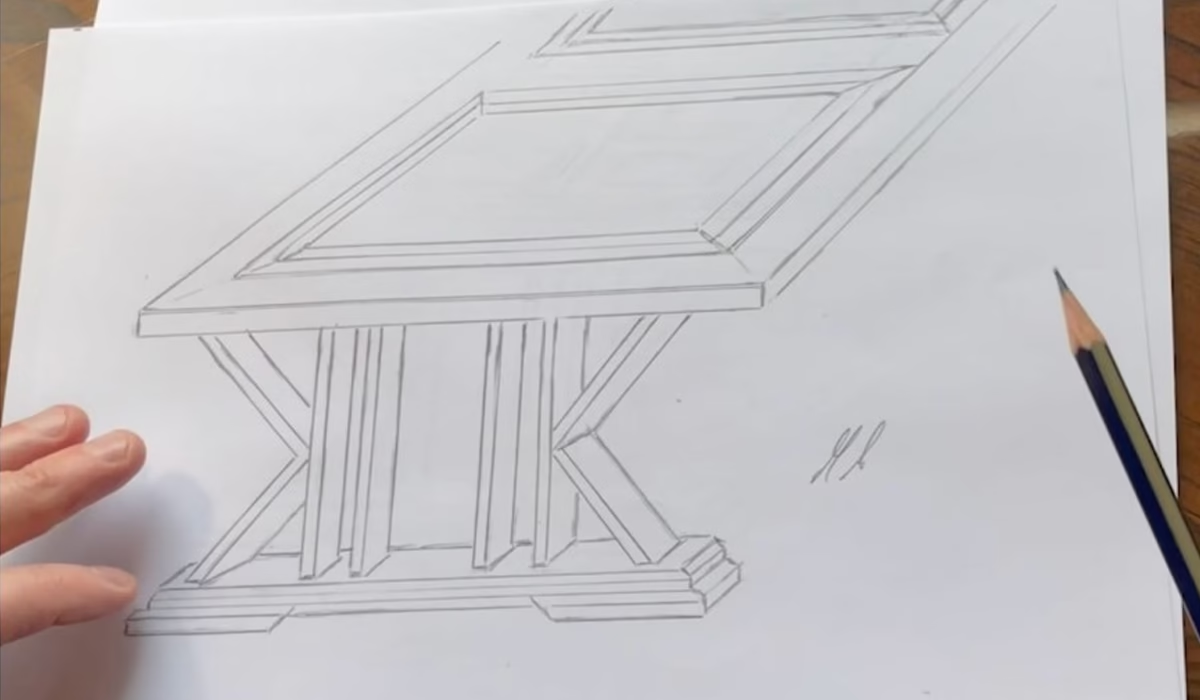
2. Sketches and drawings: hand drawn concepts showing shape, base and surface
3. Material selection: choosing timber species, veneers, inlays and finish
4. Approval: confirming drawings, dimensions and samples before production
5. Making: shaping, joining and assembling the base and top by hand
6. Finishing: applying the chosen finish to achieve depth and durability
7. Delivery and placement: installing the dining table in the room
Production is overseen personally at each stage, and clients receive photo and video updates as their dining table and dining chairs takes shape.
Which Finishes Suit an Art Deco Dining Table?
Finishes that bring out depth and reflect light suit an Art Deco dining table best. A hand applied French polish creates a deep, warm lustre that suits refined dining tables, while more resilient finishes can be chosen for dining tables that see heavy daily use.
Luxury interior designer, furniture designer and manufacturer, Mark Alexander trained in French polishing and furniture manufacturing before establishing his studio in 1981. That background means finish is considered from the first sketch, not added at the end. Interior designer Mark Alexander can advise on the right balance between lustre and durability for the way your household uses the dining table.
What Should You Approve Before Your Dining Table Is Made?
You should approve the drawing, dimensions, timber, finish and placement before production begins. These decisions define the finished dining table and are difficult to change once manufacturing begins.
Check the drawing against the room, confirm clearances around the dining table, view timber and finish samples in the room’s own light, and agree how the dining table will be delivered and positioned. Clients of the studio preview hand drawn concepts and detailed project plans before anything is made.
How Should a Custom Made Art Deco Dining Table Be Cared For?
A custom made Art Deco dining table should be cared for with gentle cleaning, protection from heat and moisture, and sensible placement away from harsh direct sun. Good care keeps a fine finish of the dining table looking its best for generations.
Use coasters and placemats, wipe spills promptly with a soft, slightly damp cloth, avoid harsh chemical cleaners and keep the dining table away from heaters and air conditioning vents where possible. The studio provides care guidance after delivery, so each finish is looked after in the right way.
How Can Luxury Interior Designer, Furniture Designer and Manufacturer, Mark Alexander Design Your Art Deco Dining Table?
Mark Alexander can design your dining table around your room, your household and the style of your home, then make it in his own studio in Australia. Dining tables can be produced in any style, colour, shape and size.
If you have struggled to find a dining table that suits the proportions of your room, or one with the character your interior deserves, interior designer Mark Alexander can help by drawing a dining table specifically for your space. Browse the studio’s dining tables, read our guide to styling an Art Deco dining room, or book a private appointment through the Interior Designer Melbourne page.
Frequently Asked Questions About Art Deco Dining Tables
What is an Art Deco dining table?
An Art Deco dining table is a table designed in the Art Deco style, typically with a sculptural pedestal or stepped base, a richly figured or polished top and a strong geometric or curved outline.
How big should a dining table be for six people?
A round Art Deco dining table of around 150 centimetres, or a rectangular dining table of roughly 180 centimetres, usually seats six comfortably. Allow about 90 centimetres of clear space behind each dining chair.
Are pedestal dining tables good for dining rooms?
Yes. Pedestal dining tables free up leg room, make seating more flexible and suit round and oval tops. They are a classic Art Deco base design.
What wood is best for an Art Deco dining table?
Timbers with striking grain, such as walnut and figured veneers, and dark timbers with a polished finish suit Art Deco dining tables. Contrasting inlays add further detail.
How do you protect a polished timber dining table?
Use coasters and placemats, wipe spills quickly, avoid harsh cleaners and keep the dining table away from direct heat and strong sun. Follow the care guidance provided for the specific finish.